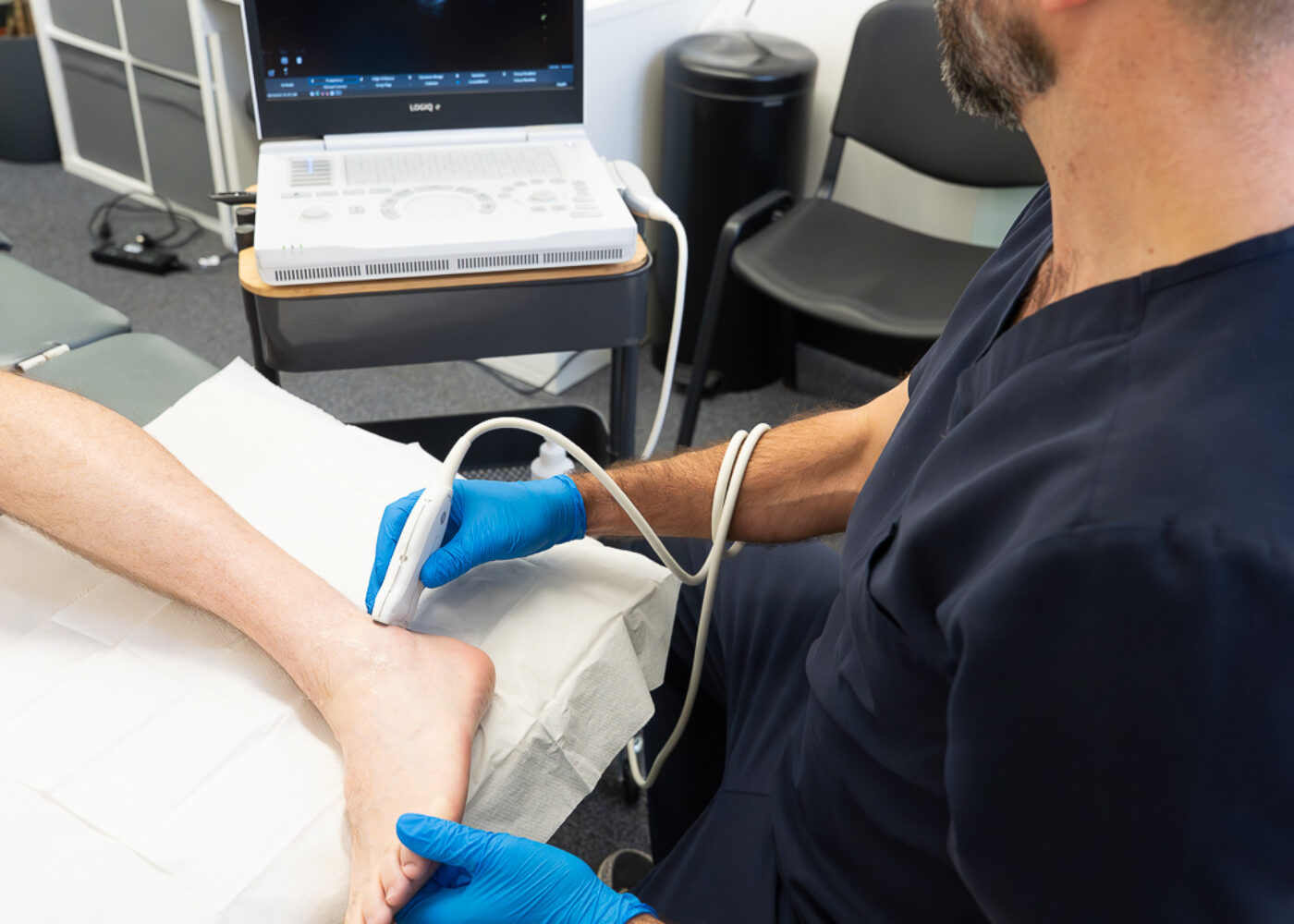
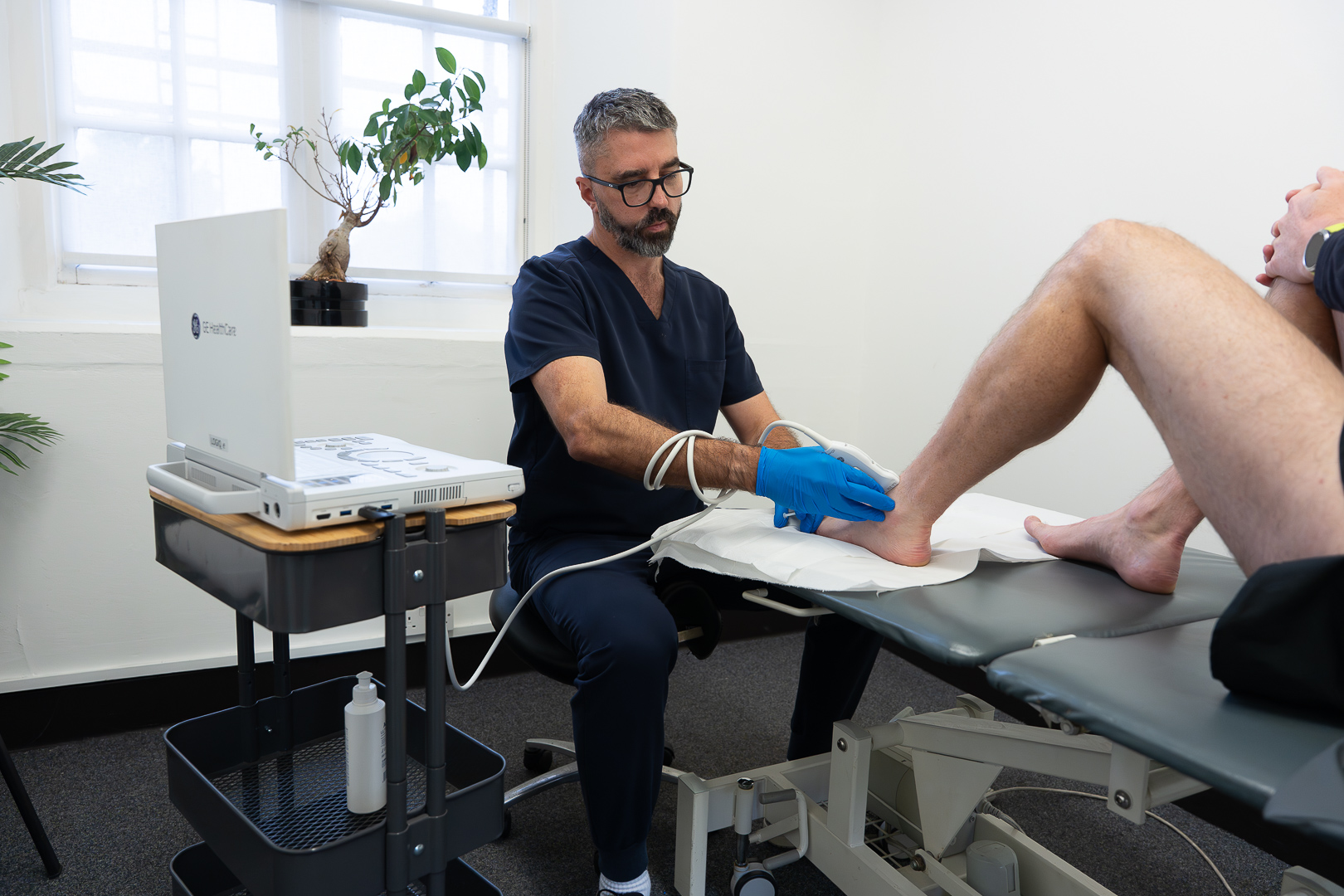
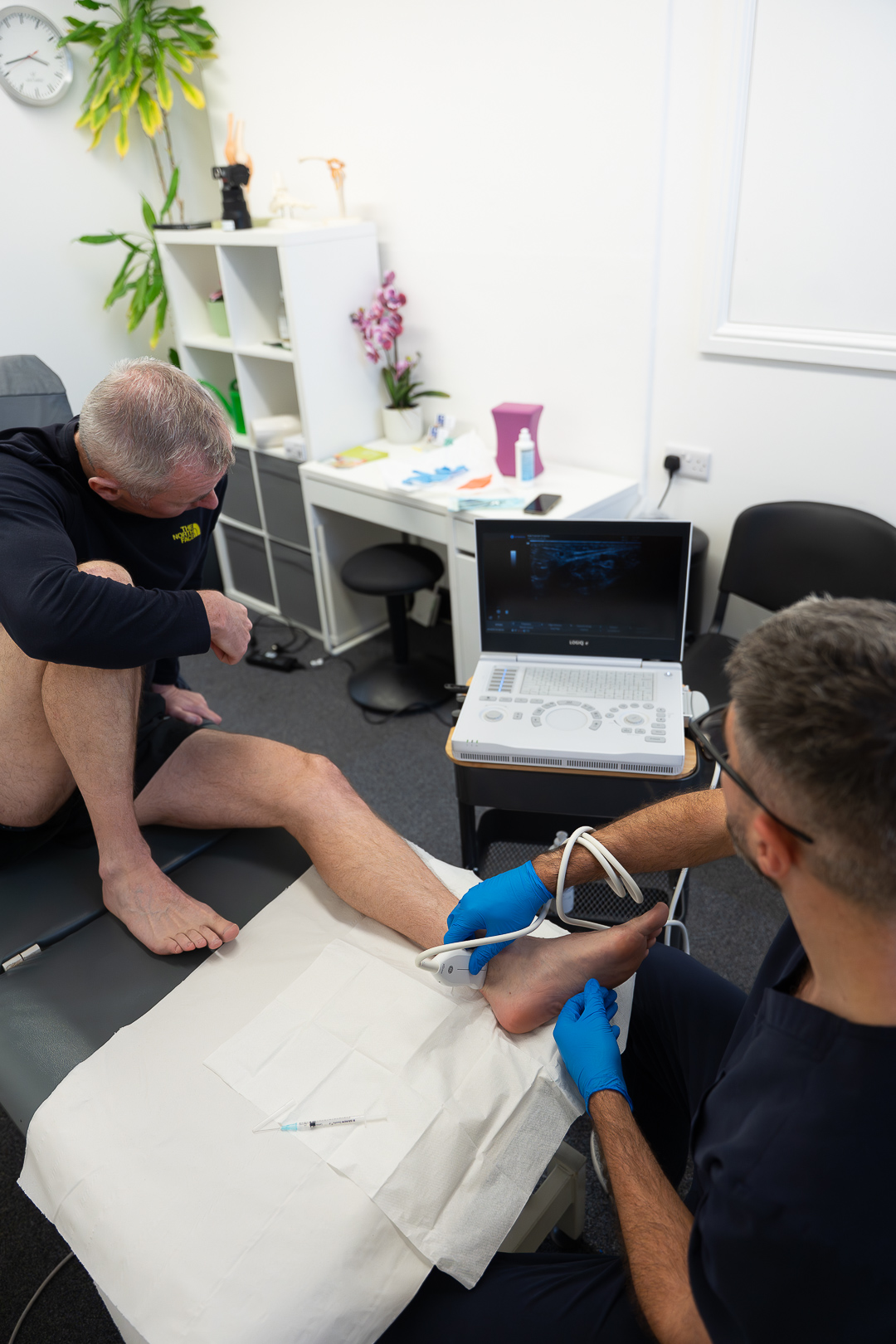
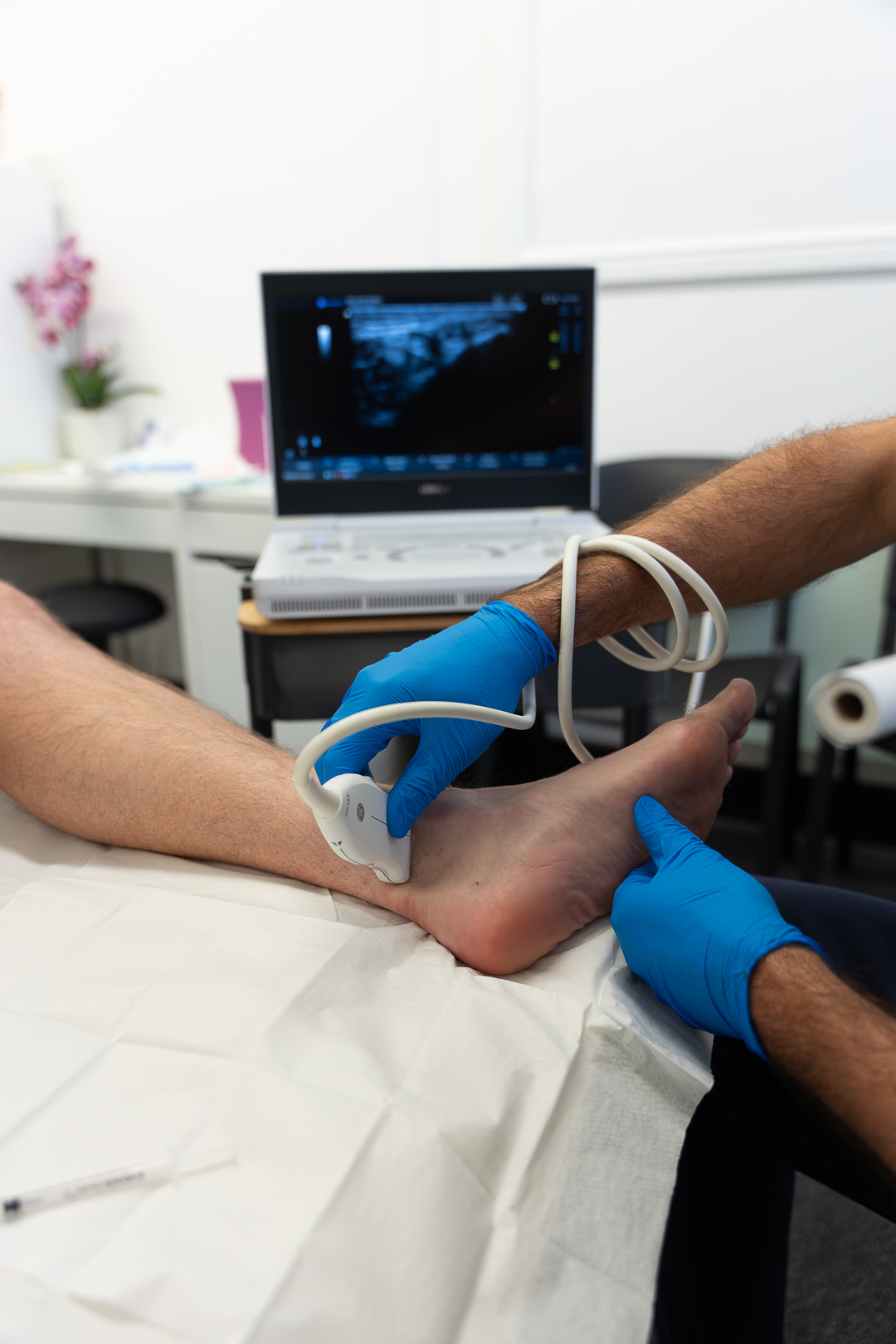
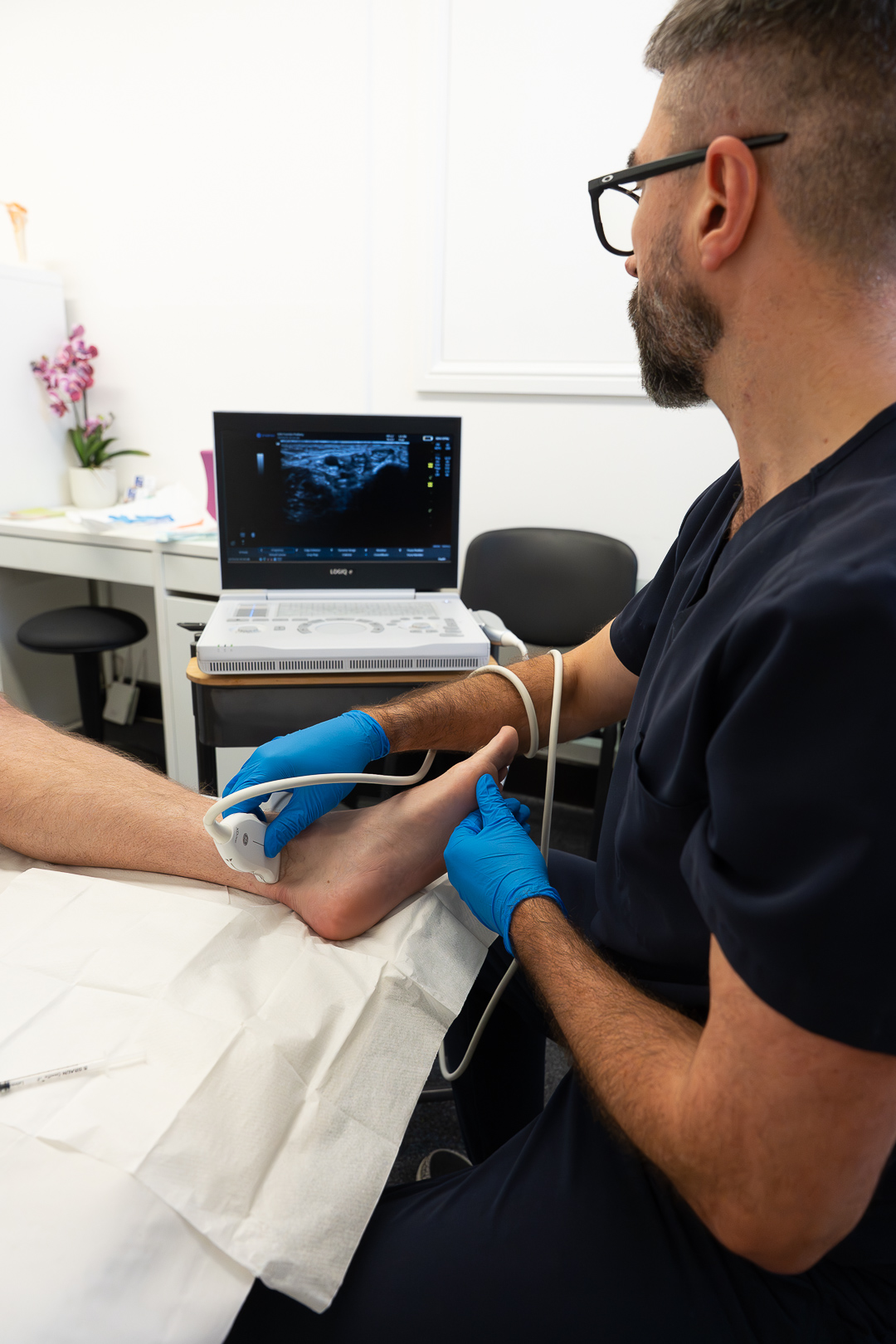
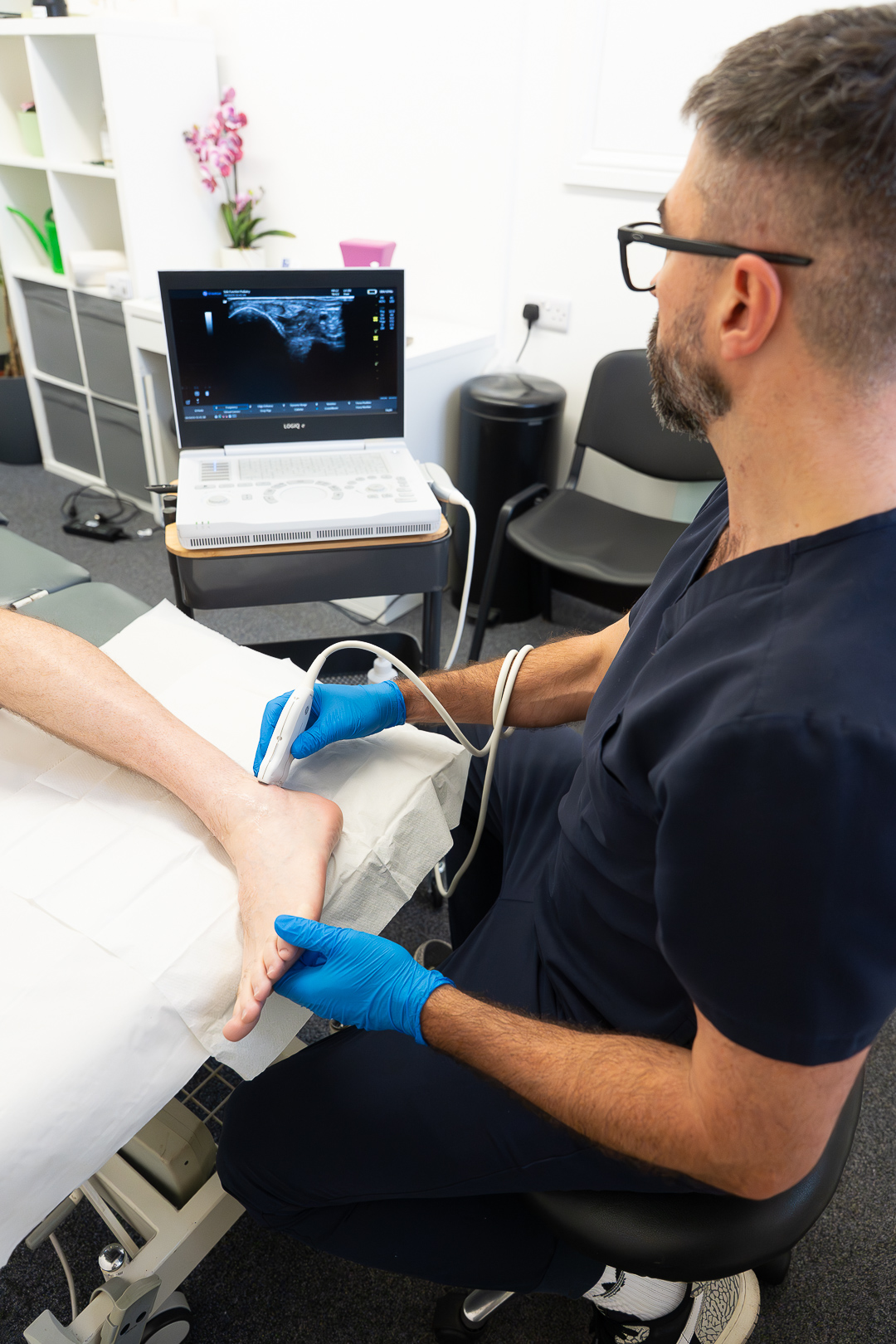
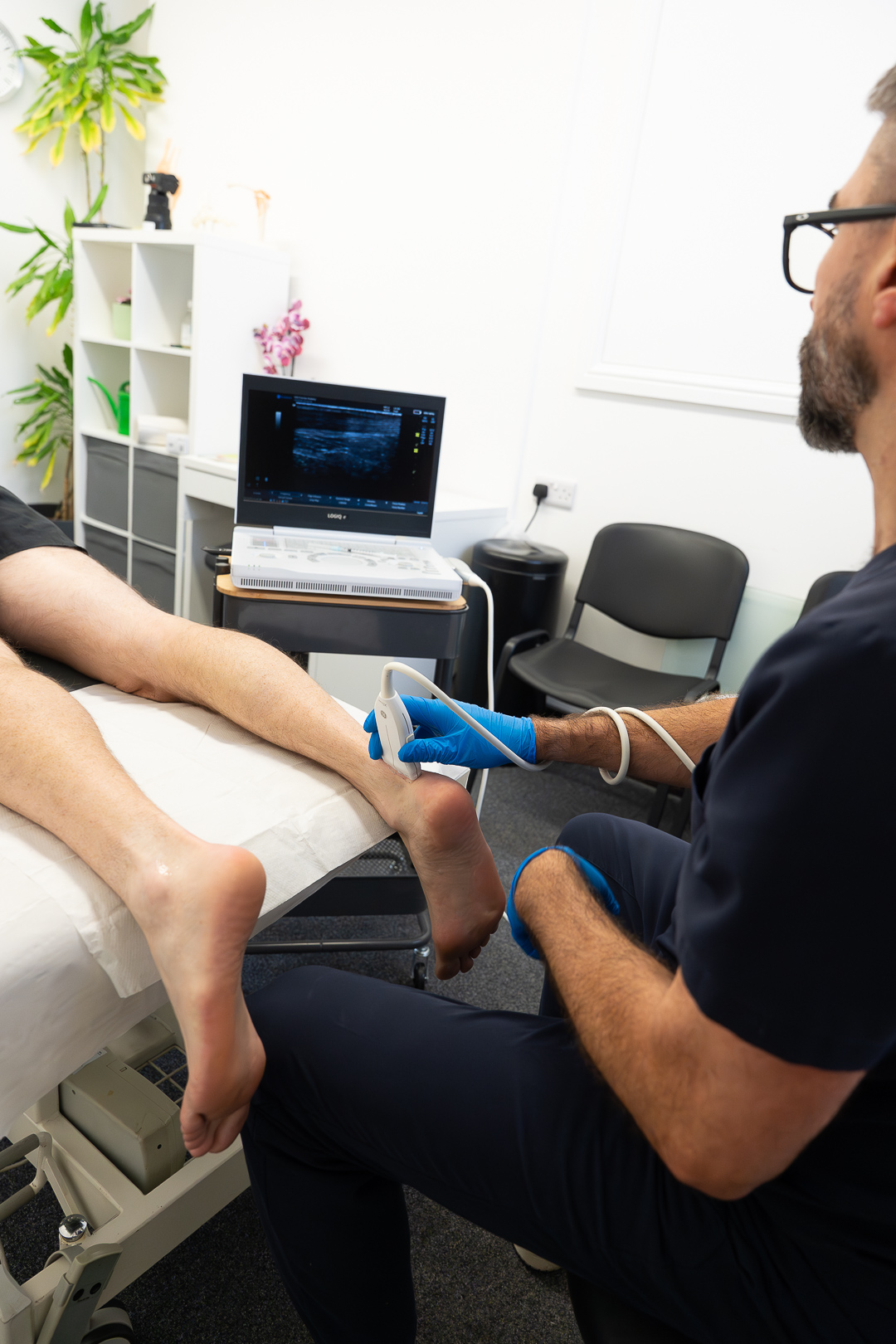
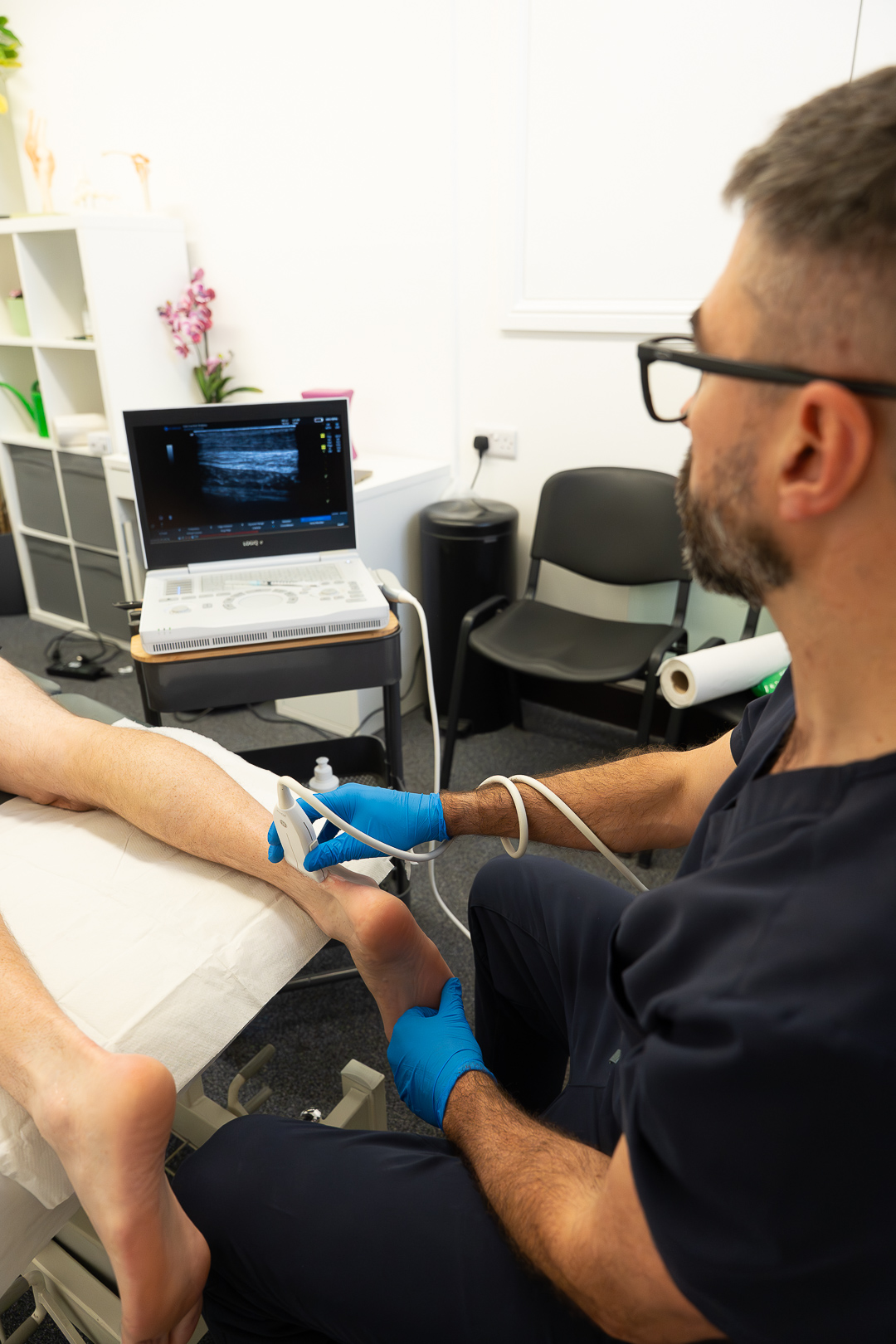
Diagnostic musculoskeletal (MSK) ultrasound is a safe non-invasive imagining technique that uses high-frequency sound waves to create real-time images of muscles, tendons, ligaments, joints, and other soft tissues to diagnose musculoskeletal conditions or sports injuries. The method is useful for identifying issues like tendon tears, sprains, inflammation, soft tissue swellings/cysts and nerve entrapments without using radiation. It can also assess the dynamic movement of tissues, which helps diagnose problems like impingements or instability.
What it is
- A painless imaging method that uses sound waves to show real-time pictures of the body’s internal soft tissues.
- It is used to examine muscles, tendons, ligaments, joints, nerves, and other soft tissues.
- It does not use radiation, making it a safe imaging option.
What it is used for
- Diagnosing injuries: Identifying issues such as tendon tears, sprains, and soft tissue damage.
- Assessing inflammation: Detecting fluid collections or inflammation in joints or tendon sheaths.
- Evaluating function: Visualizing how tissues move in relation to each other, which can show problems like impingement or instability.
- Identifying other conditions: May help diagnose conditions like arthritis, Gout, lumps & bumps ie ganglion cysts, tarsal tunnel syndrome, and in some cases, stress fractures.
How it differs from other imaging
- Real-time images: Can show the dynamic movement of tissues, which is not possible with X-rays or MRI.
- No radiation: A major advantage over X-rays.
- Cost-effective: Often a more cost-effective option compared to an MRI scan.
- Dynamic assessment: Provides unique insights by watching structures move under stress, which is different from static MRI or X-ray images.